
杨航
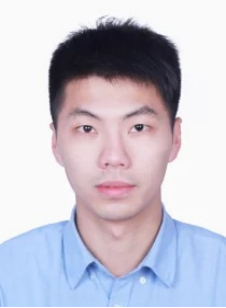
杨航,男,1991年10月,湖北省荆州人,讲师,博士,硕士生导师。
一、主要教育背景与培训经历
2009.9-2013.6 就读于中国矿业大学(北京),获工程学士学位。
2015.9-2018.6 就读于杭州师范大学临床认知神经科学专业,获教育学硕士学位(导师:赵静教授,翁旭初教授)。
2018.10-2024.7 就读于荷兰格罗宁根大学认知神经科学专业,获心理学博士学位(导师Marieke van Vugt副教授, Niels Taatgeen教授)。
2024.7-2025.12 瑞士洛桑联邦理工学院(EPFL)认知神经科学实验室,博士后(导师:Olaf Blanke教授)。
二、主要工作经历
2025.12—至今任职于Cableav 教育学院。
三、主要研究方向
我关注一个基础而又富有启发性的问题:身体如何影响认知、情绪与社会理解?
在日常生活中,思维并非仅由大脑独立完成。身体的位置、动作、感觉,甚至呼吸和心跳,都会影响我们如何理解自己、理解他人,以及如何产生和调节情绪。我的研究正是围绕这一问题展开,重点探讨身体自我(Bodily Self)如何塑造认知、情绪与社会互动。
当前研究方向主要包括:
• 身体自我意识 (Bodily Self-consciousness):个体如何形成“这是我的身体”“我在这里”等基本自我体验
• 具身认知 (Embodied Cognition):身体信息如何影响认知过程
• 情绪与自发思维 (Emotion and Spontaneous Thoughts):反刍思维的心理与神经机制
• 儿童发展 (Child Development):儿童社会认知、阅读及相关能力的发展过程
在研究方法上,我结合行为实验、脑电(EEG)、功能近红外脑成像(fNIRS)和虚拟现实(VR)等技术,关注典型发育人群,以及孤独症、阅读障碍、抑郁等群体的认知与情绪特点,并探索冥想、身体觉察等方式在认知干预与情绪调节中的潜在作用。期望为相关群体的理解、康复与干预提供科学依据。
如果你对以下问题感兴趣:
身体如何影响认知与情绪?
情绪和社会认知如何在实验中被测量?
VR和脑成像技术如何应用于心理学与特殊教育研究?
欢迎交流与合作,也欢迎对心理学、特殊教育、脑科学、脑电数据分析或虚拟现实技术感兴趣的同学和合作者加入我们的研究!
四、主讲课程
1.本科生:《认知神经科学概论》、《神经损伤与障碍性行为经典案例分析》、《特殊儿童辅助技术》
2.研究生:《认知神经科学专题研究》、《教育研究方法》
五、承担科研课题
(1)浙江省残疾人福利基金会孤独症研究专项基金项目(主持):基于视角采择的具身认知训练:孤独症儿童社会交往与情绪理解能力提升研究(课题编号:2025013) 2.8万元。
(2)Cableav 科研启动项目 8万元
(3)瑞士洛桑联邦理工学院科研转化课题(参与), The Home Within: Minimal Phenomenal Selfhood, Phenomenal Existence and Meditation Neuroengineering 项目总经费100万(瑞郎)
六、代表性论文
Yang H., Herbelin B.,Ngo C.,Vuarnesson L.,Blanke O. (2025) Meditation in the third-person perspective modulates minimal self and heartbeat-evoked potentials. Neuroimage. 314, 121265. [SCI,中科院⼆区TOP期刊,五年影响因⼦:6.1]
Yang, H., van Vugt, M. (2024) “Sticky” thinking disrupts decision-making for individuals with a tendency towards worry and depression. Emotion. [SSCI,中科院⼆区Top期刊,五年影响因⼦:4.5]
Yang, H., Paller, K. A., & van Vugt, M. (2022). The steady state visual evoked potential (SSVEP) tracks “sticky” thinking, but not more general mind-wandering. Frontiers in Human Neuroscience, 16, 892863. [SCI,第⼀作者,中科院三区期刊]
Yang, H., Zhao, J., Gaspar, C. M., Chen, W., Tan, Y., & Weng, X. (2017). Selectivity of for words in the right hemisphere: Evidence from single trial analysis. Psychophysiology, 54(8), 1128–1137. [SSCI,中科院⼆区期刊,五年影响因⼦3.8]
Kaushik, P., Yang, H., Roy, PP., van Vugt, M. (2023). Comparing resting state and task-based EEG using machine learning to predict vulnerability to depression in a non-clinical population. Scientific Reports 13 (1), 7467. [SCI,中科院三区期刊,五年影响因⼦:4.3]
Xue, H., Wang, Z., Tan, Y., Yang, H., Fu, W., Xue, L., & Zhao, J. (2020). Resting-state EEG reveals global network deficiency in dyslexic children. Neuropsychologia, 138, 107343. [SCI,中科院三区期刊,五年影响因⼦:2.6]
七、会议报告
(1) Hang Yang; Altered Neural Responses in a New Meditation Practice for Manipulating Bodily-Self Consciousness, Annual Meeting of the Association for the Scientific Study of Consciousness (ASSC), 克里特岛, 希腊, 2025-07-06至2025-07-09 (口头报告)
(2) Hang Yang; Olaf Blanke; Modulation of neural responses to heartbeats during a novel meditation practice targeting manipulation of bodily self-consciousness, International Society for Contemplative Research 2024, 帕多瓦, 意大利, 2024-06-19至2024-06-23 (口头报告)
(3) Hang Yang; Jing Zhao; Marieke van Vugt; Orthographic and semantic information in Chinese characters drives the evidence accumulation in the lexical decision task (LDT): A drift diffusion model (DDM) analysis., 18th NVP Winter Conference on Brain and Cognition, Egmond aan Zee, 荷兰, 2022-04-28至2022-04-30 (海报展示)
(4) Hang Yang; Ken Paller; Marcia Grabowecky; Marieke van Vugt; Can the steady-state visual evoked potentials (SSVEP) predict mind wandering?, Cognitive Neuroscience Society Annual Conference 2021, 美国, 2021-03-13至2021-03-16 (口头报告)
(5) Hang Yang; Jing Zhao; Xuchu Weng; Selectivity of N170 for visual words in the right
hemisphere: Evidence from single-trial analysis., The 16th International Conference on the Processing of East Asian Languages (ICPEAL), 中国广州, 2016-12-08至2016-12-10 (海报展示)
八、同行评审工作
担任《Nature Mental Health》、《Journal of Neuroscience》、《Imaging Neuroscience》、《Reading and Writing》和《Brain Research》等期刊的审稿人
九、联系方式
地址:安徽省淮北市沱河路Cableav 教育学院 邮编:235000
E-mail:[email protected]; [email protected]
用户登录